
Catholicism is rich with symbols that convey deep spiritual truths and traditions. While many are familiar with the cross, the rosary, and the crucifix, there exists a myriad of other symbols woven into art, architecture, and literature that carry significant meaning within the Catholic faith. Here are 20 unique symbols you might not have known were rooted in Catholicism.
| Symbol | Core Symbolism | Catholic Significance / Where You’ll See It |
|---|---|---|
| The Pelican in Her Piety | Self-giving love that nourishes others with one’s own life | Image of the Eucharist and Christ’s sacrifice; on altars, tabernacles, and Corpus Christi art |
| The Fleur-de-lis | Three-petaled lily for purity and the Trinity | Marian purity and St. Joseph’s chastity; on stained glass, heraldry, and Marian banners |
| The Peacock | Incorruptibility and eternal life | Symbol of resurrection in early Christian mosaics and tomb art |
| The Unicorn | Purity tamed only by a virgin | Allegory of the Incarnation through Mary; medieval Annunciation and bestiary-inspired art |
| The Anchor | Steadfast hope that holds fast in storms | “Hope as an anchor” (Heb 6:19); catacomb markings and Christian graves |
| The Eye of Providence | All-seeing, caring governance from on high | Divine providence and the Trinity (triangle); Baroque altarpieces and church pediments |
| The Quincunx | Five-point pattern recalling a wounded center | The Five Wounds of Christ; on vestments, devotions, and church ornament |
| The Phoenix | Death that gives way to new, risen life | Christ’s Resurrection and Christian hope; Easter imagery and funerary art |
| The Dolphin | Guide and rescuer over perilous waters | Christ leading souls to safe harbor; early sarcophagi with fish/ship motifs |
| The Chi-Rho | Christ’s name intertwined as a royal monogram | Confession of Jesus as Messiah and Lord; on altars, vestments, and the Paschal candle |
| The Vine and Branches | Life flowing from the vine into fruitful branches | Union with Christ (Jn 15) and the Eucharist; carved capitals, windows, and chalice art |
| The Crown | Victory and reward after faithful perseverance | “Crown of life” and martyr’s crown; saints’ iconography and royal Marian titles |
| The Lily | Spotless purity and holiness | Attributes of Mary and chaste saints; Annunciation scenes and Joseph’s staff |
| The Scallop Shell | Journeying and rebirth through water | Pilgrimage (St. James) and Baptism; shells used to pour baptismal water and on fonts |
| The Ladder | Ascent in virtue toward God | Jacob’s dream and spiritual growth; monastic art and Passion instruments |
| The Beehive | Harmonious labor for a common good | The Church as a diligent community; linked to St. Ambrose and the Paschal Exsultet |
| The Oak Tree | Strength, endurance, and rootedness | Fortitude and fidelity to God; parish seals, sacred art, and devotions |
| The Ship | Community borne safely through rough seas | The Barque of Peter (the Church); the church “nave” and nautical symbolism |
| The Stag | Longing for life-giving waters | Desire for God (Ps 42:1) and conversion legends (St. Eustace/Hubert); baptismal art |
| The Butterfly | Transformation through death into new life | Resurrection and the soul’s immortality; Easter and funerary imagery |
The Pelican in Her Piety
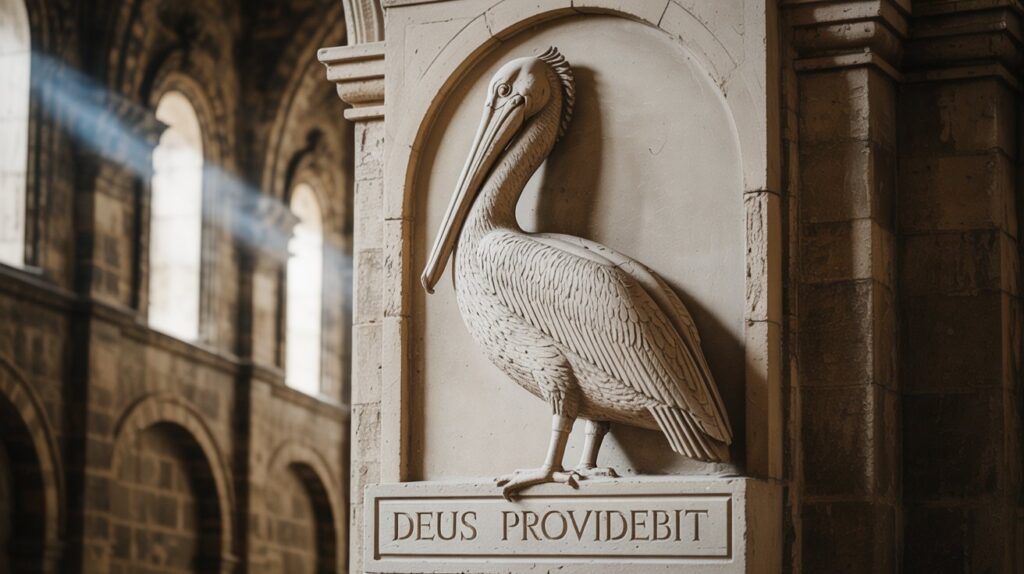
Symbolism: A mother pelican pierces her breast to feed her young with her blood—an emblem of life-giving, self-emptying love that sustains others at personal cost.
Catholic Significance: From medieval bestiaries like the Physiologus, the pelican became a vivid sign of Christ who gives His Body and Blood in the Eucharist for the life of the world (Jn 6). Found on altar frontals, tabernacle doors, and in Corpus Christi processions.
The Fleur-de-lis
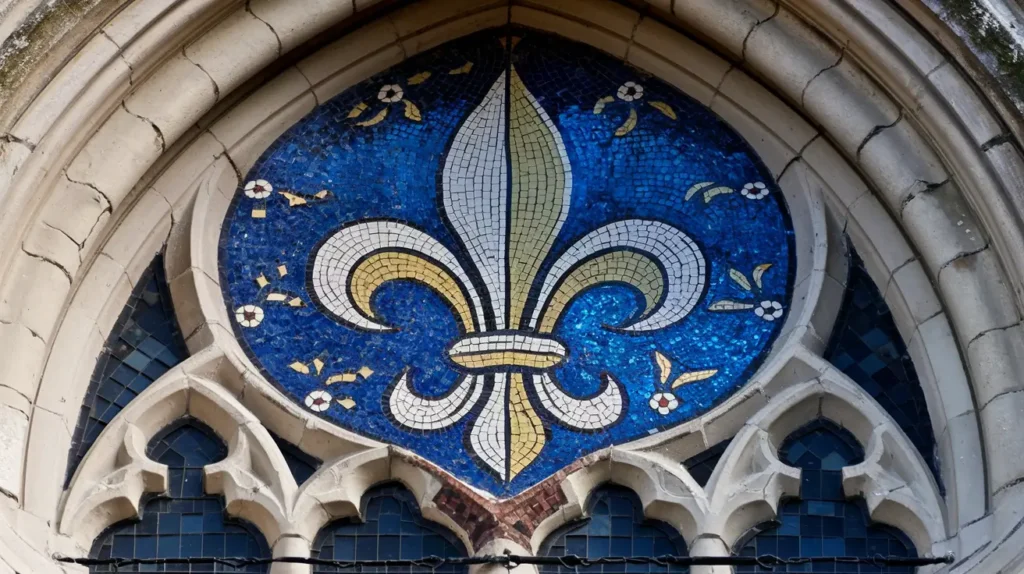
Symbolism: A stylized lily with three petals bound together, merging purity (the lily) with a trinitarian form (three-in-one).
Catholic Significance: The lily is Marian, so the fleur-de-lis evokes Mary’s immaculate purity and St. Joseph’s chaste guardianship (often shown with a lily-topped staff). Its threefold design hints at the Holy Trinity; seen in Marian shrines, heraldry, and vestments.
The Peacock
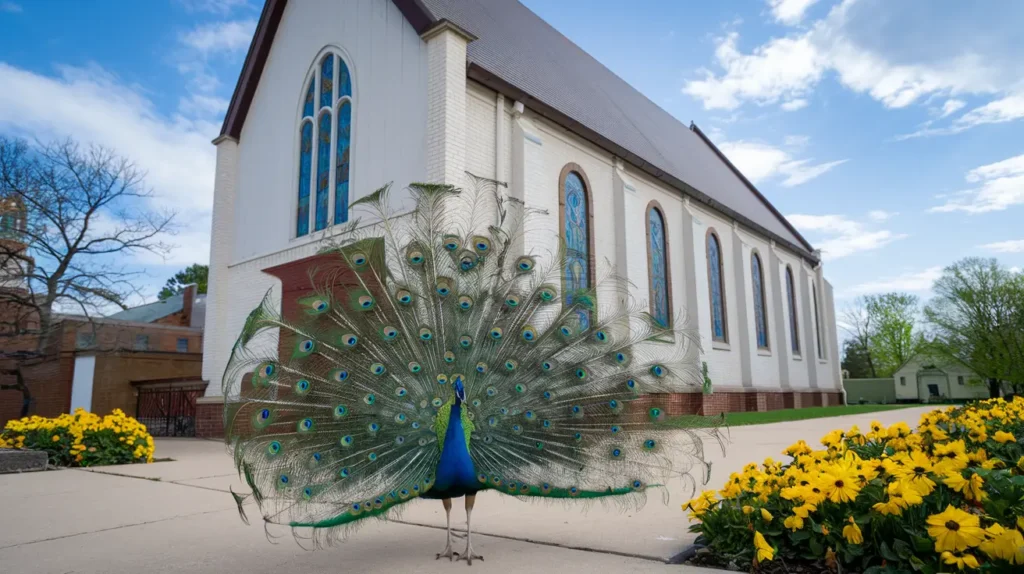
Symbolism: With flesh once thought not to decay and feathers “eyed” like watchful jewels, the peacock stands for incorruptibility and glory.
Catholic Significance: Early Christians used the peacock to proclaim resurrection and eternal life in Christ. Look for it in catacomb paintings, mosaics, and funerary art.
The Unicorn
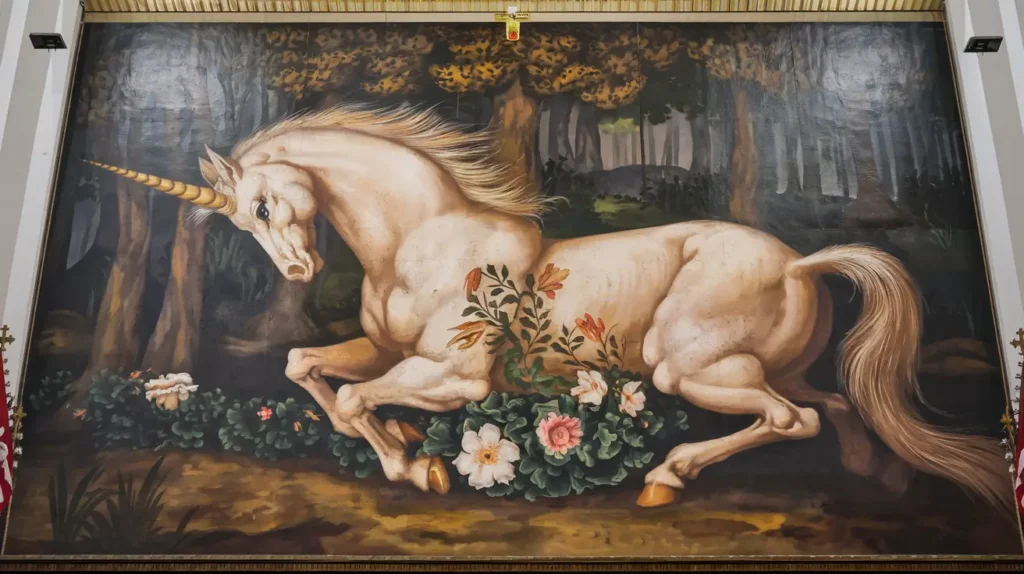
Symbolism: A fierce, untamable creature subdued only by resting in a virgin’s lap—purity’s power over strength.
Catholic Significance: In medieval allegory the unicorn prefigures the Incarnation: the Word becomes flesh through the Virgin Mary. Annunciation art and illuminated manuscripts use the unicorn to teach that divine humility enters the world through virginal purity.
The Anchor

Symbolism: A weight that grips the seabed so a ship is not driven by storms—steadfastness amid trial.
Catholic Significance: Hebrews 6:19 calls hope “an anchor for the soul.” Early Christians carved anchors in the catacombs as a discreet confession of faith and a reminder that hope in Christ holds firm when waves rise.
The Eye of Providence
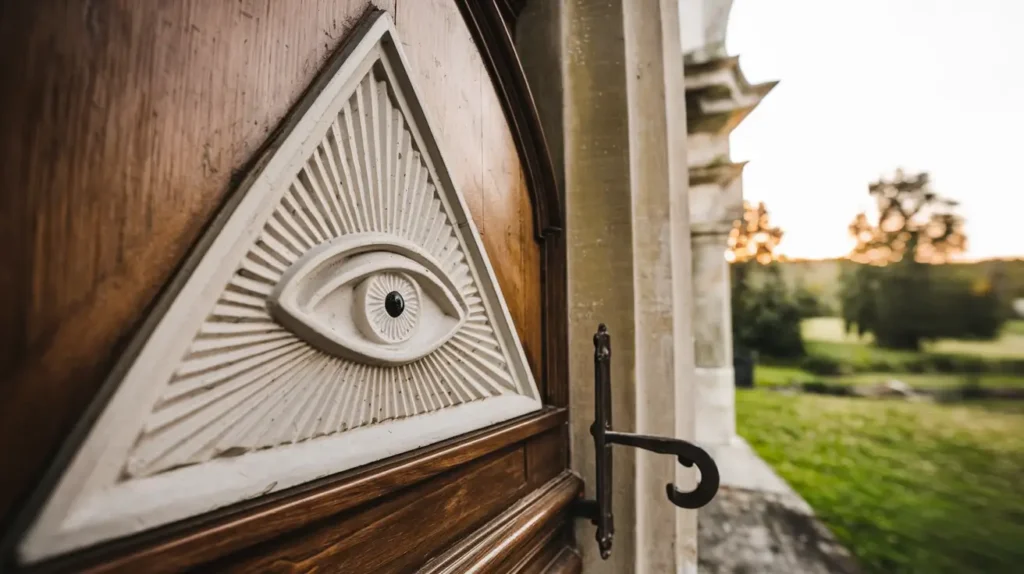
Symbolism: An eye within a radiant triangle—loving knowledge (the eye) within triune communion (the triangle) shining over creation.
Catholic Significance: Used in Catholic baroque art, it signals the Father’s providential care and, by the triangle, the Holy Trinity. Often crowns altarpieces and domes, reminding worshippers that God lovingly sees, sustains, and guides.
The Quincunx
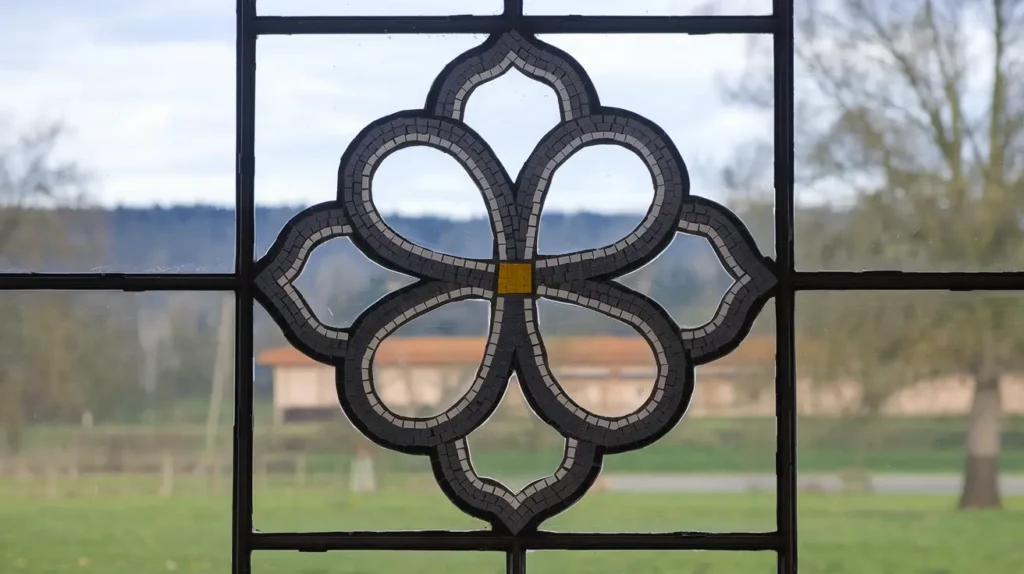
Symbolism: Four outer points surrounding a marked center—attention drawn to a wounded heart at the middle.
Catholic Significance: The five-point pattern recalls the Five Wounds of Christ (hands, feet, side). Appears on paraments, reliquaries, and devotions that contemplate the Passion and the healing that flows from it.
The Phoenix
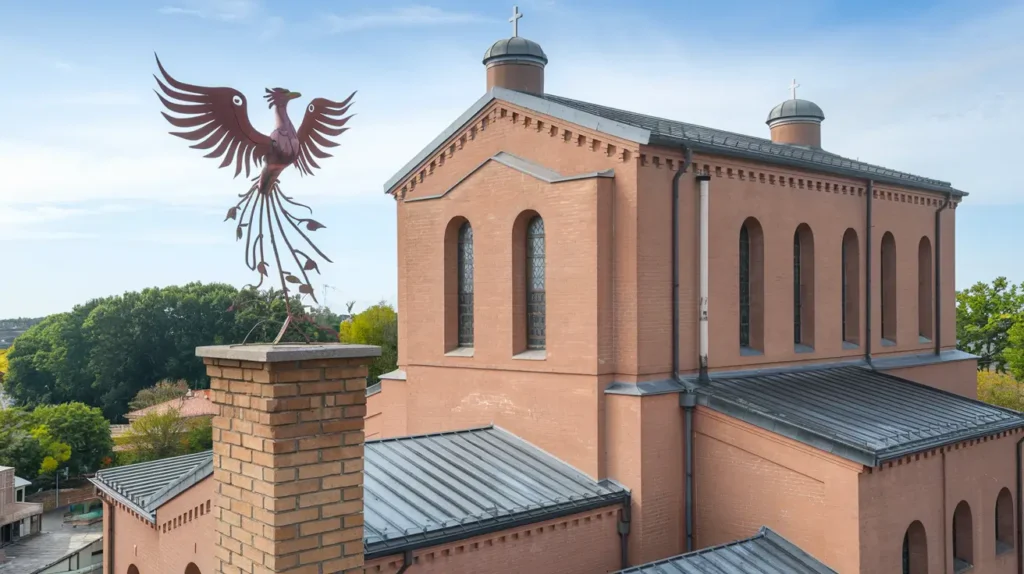
Symbolism: A bird that dies in fire and rises anew from its ashes—life triumphing over death.
Catholic Significance: Adopted by the Fathers as a natural parable of Christ’s Resurrection and the Christian’s rebirth. Phoenix imagery often ornaments Easter textiles, tombs, and preaching about baptismal new life.
The Dolphin
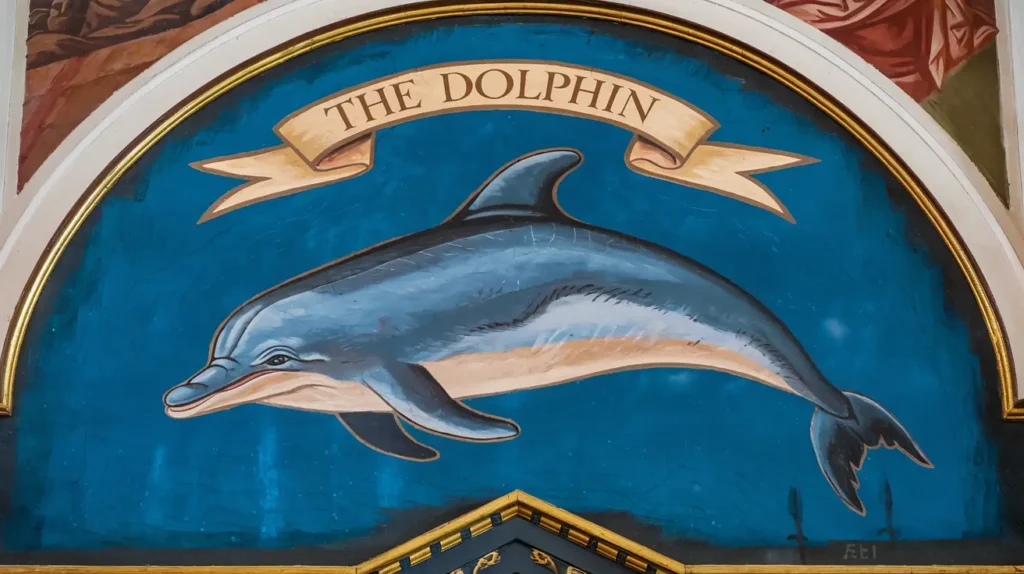
Symbolism: A swift, friendly pilot guiding the vulnerable to shore—rescue and safe passage.
Catholic Significance: Early Christians depicted dolphins with ships and anchors to show Christ as the loving Guide who leads souls through peril to heaven. Seen on sarcophagi and maritime-themed church art.
The Chi-Rho
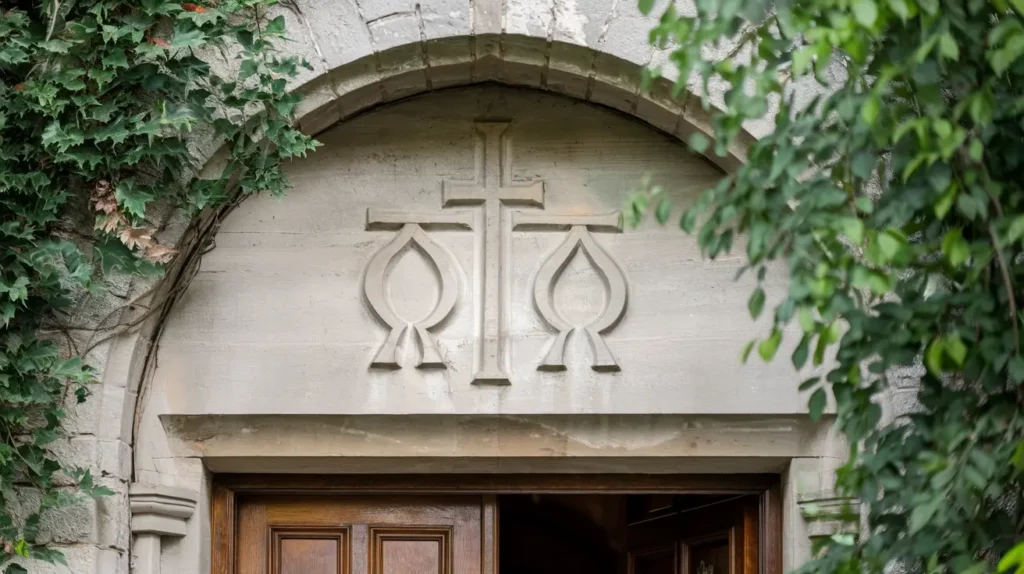
Symbolism: The first two letters of “Christ” in Greek (Χ and Ρ) woven into one sign—identity and kingship.
Catholic Significance: A universal Christogram since antiquity (famously linked to Constantine’s vision). It crowns altars, vestments, and the Paschal candle as a compact proclamation that Jesus is Lord and victor over death.
The Vine and Branches
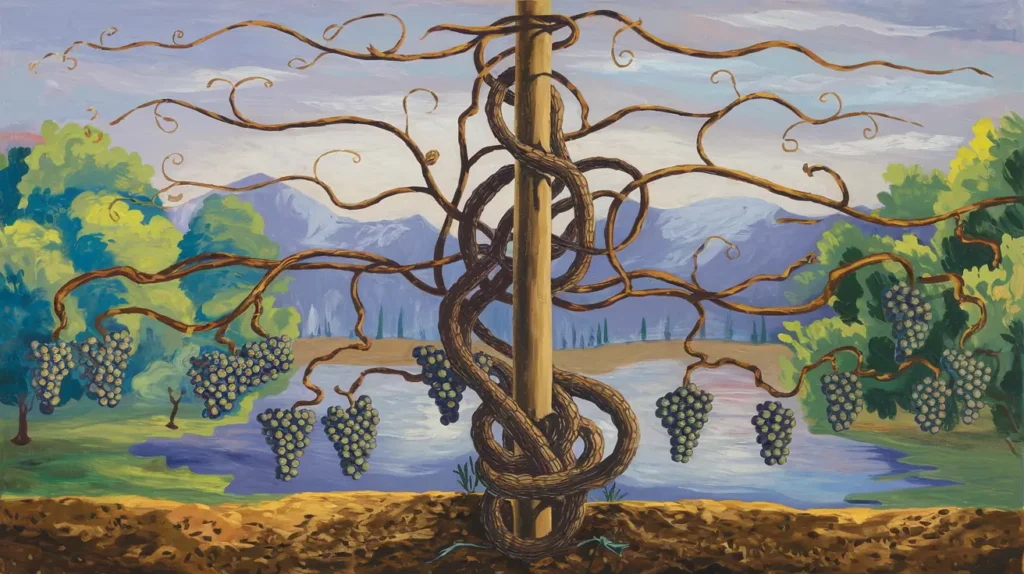
Symbolism: Sap flowing from vine to branches to fruit—communion that bears life and sweetness.
Catholic Significance: Christ declares, “I am the vine; you are the branches” (Jn 15). The vine points to unity with Him and to Eucharistic wine. Expect it in window tracery, capitals, and chalice decoration stressing abiding in Christ.
The Crown
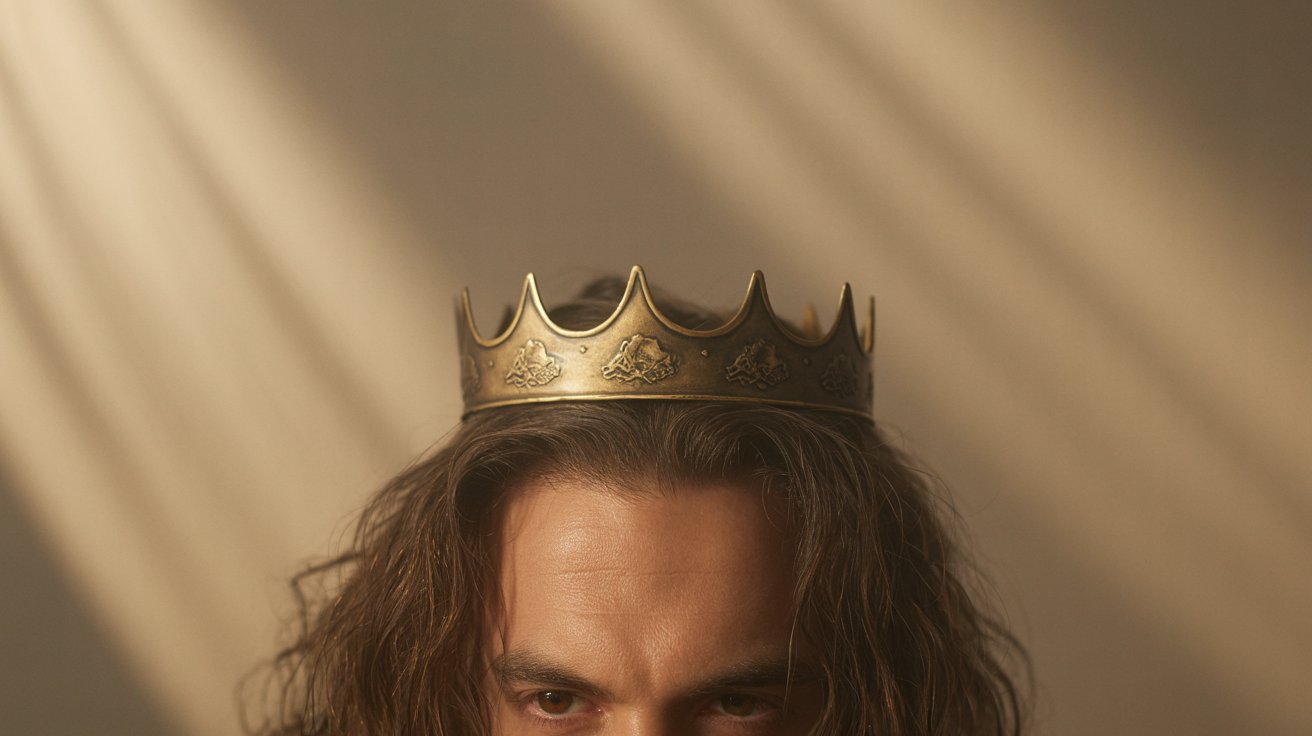
Symbolism: A wreath of victory placed after trial—glory received, not grasped.
Catholic Significance: Scripture promises the “crown of life” to those who persevere (Jas 1:12). Saints wear crowns to mark martyrdom (the “martyr’s crown”) or participation in Christ’s kingship; Mary is often shown crowned as Queen of Heaven.
The Lily
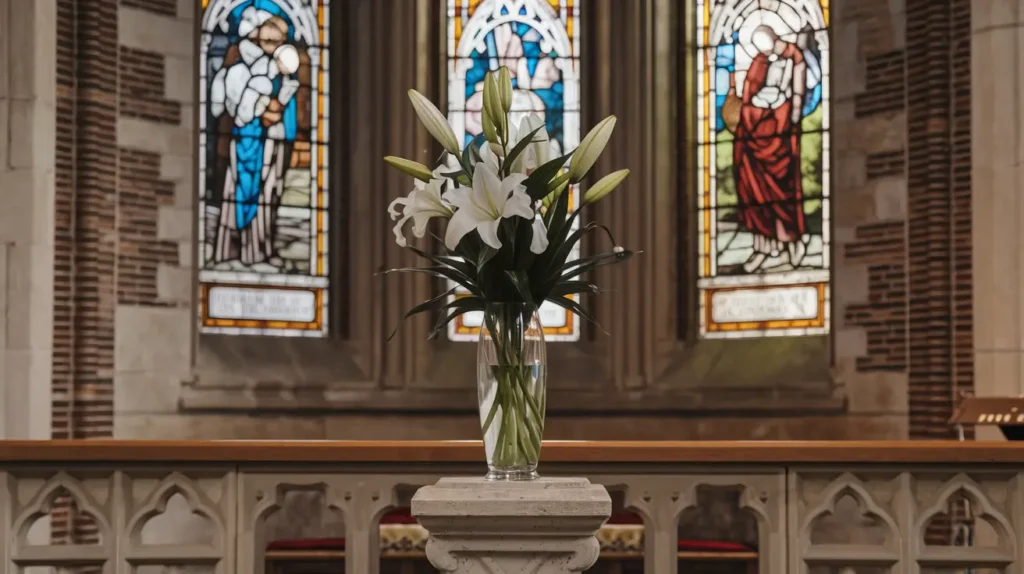
Symbolism: A white flower that opens without stain—clarity, innocence, and radiant virtue.
Catholic Significance: The lily is the flower of the Annunciation and a sign of Mary’s immaculate purity. Saints like Joseph and Anthony carry lilies to denote chaste love and single-hearted devotion to God.
The Scallop Shell
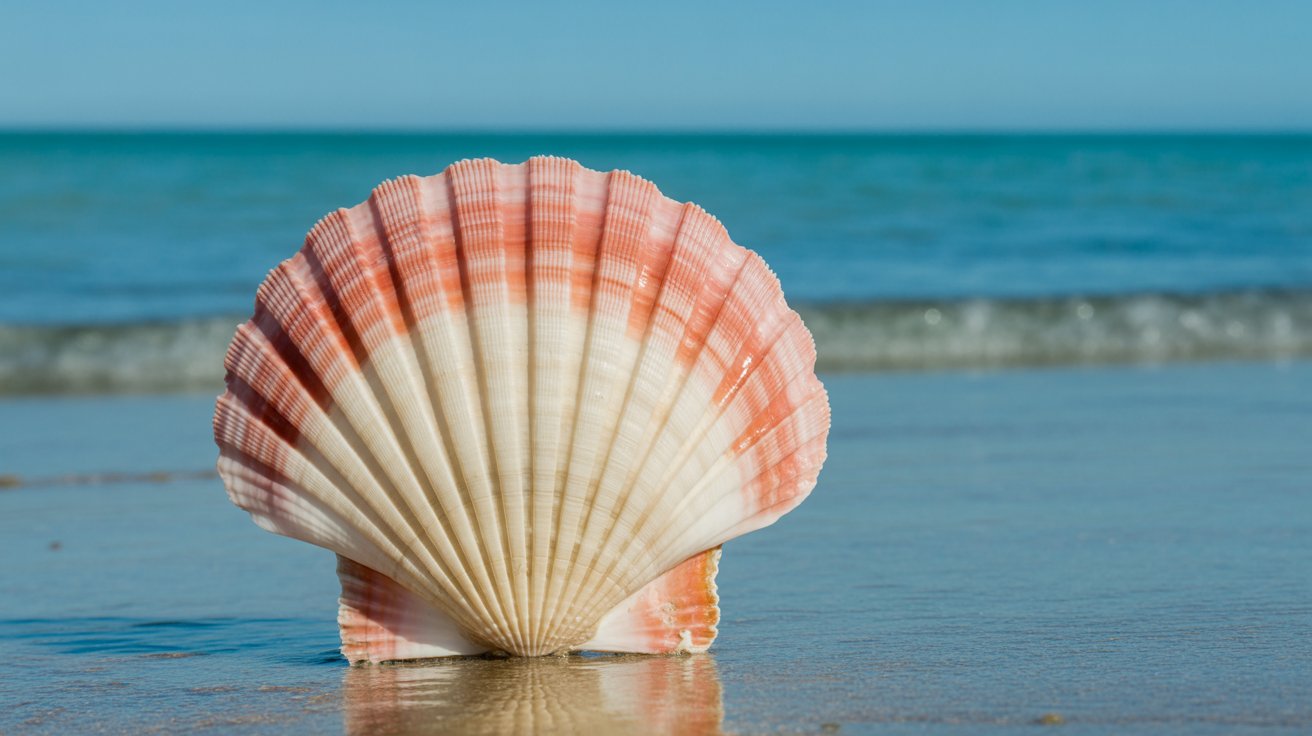
Symbolism: Fan-shaped shell worn by travelers—mark of a life on the way and of cleansing waters poured over the head.
Catholic Significance: The shell is the badge of pilgrims to Santiago (St. James) and a practical tool for pouring baptismal water. It unites pilgrimage with Baptism’s new beginning in Christ.
The Ladder

Symbolism: Rungs rising step-by-step—virtues acquired through effort that lift the soul Godward.
Catholic Significance: Rooted in Jacob’s vision (Gen 28), the ladder becomes a map of growth in holiness. In Passion scenes it also recalls the Deposition from the Cross. Monastic writers speak of “ladders” of humility and charity by which we ascend to God.
The Beehive

Symbolism: Many members laboring as one—sweetness born of ordered, communal work.
Catholic Significance: The hive mirrors the Church: many gifts, one body. Linked with St. Ambrose (whose name echoes “honeyed” speech) and the Exsultet at Easter which praises bees for the Paschal candle; it urges diligence, harmony, and doctrine “sweeter than honey” (Ps 19:10).
The Oak Tree

Symbolism: Deep roots and enduring wood—fortitude that weathers seasons without breaking.
Catholic Significance: The oak signifies steadfast faith and moral strength (fortitude). Parishes, shrines, and coats of arms use it to express fidelity to God across generations.
The Ship

Symbolism: A single hull bearing many together through waves—communion sheltered and steered.
Catholic Significance: The Church is the “Barque of Peter,” piloted by Christ through history. Church interiors are called the nave (from navis, “ship”), a lived architectural metaphor carrying the faithful toward the harbor of heaven.
The Stag

Symbolism: A vigilant creature seeking clear streams—noble desire and alertness against snares.
Catholic Significance: Inspired by Psalm 42:1, the stag signifies the soul’s thirst for God. Legends of St. Eustace and St. Hubert tell of conversion when a crucifix appeared between a stag’s antlers—hence its use near baptismal fonts and in conversion-themed art.
The Butterfly

Symbolism: Metamorphosis—burial in chrysalis, emergence in splendor; the same creature transformed.
Catholic Significance: A natural parable of resurrection: from the “tomb” of death to a new mode of life. Butterflies appear in Easter art and on Christian graves as hopeful signs of the soul’s immortality and the promise of the risen body.
Conclusion
These symbols, though sometimes overlooked or misunderstood, enrich the Catholic tradition by providing profound visual representations of faith, doctrine, and the spiritual journey. They serve as reminders of the Church’s history and the enduring truths that continue to inspire believers around the world.